Formed, filled and sealed in one sequence
Polymer is extruded, shaped into the container, filled, then closed before the unit leaves the machine.
Blow-Fill-Seal contract manufacturing
Start with a formula, an existing sample or early specifications. We coordinate polymer and format questions, container design, sample development, manufacturing controls and pack-out around the intended dose and target market. If BFS is not the right fit, we can compare glass or preformed-container filling before development advances.
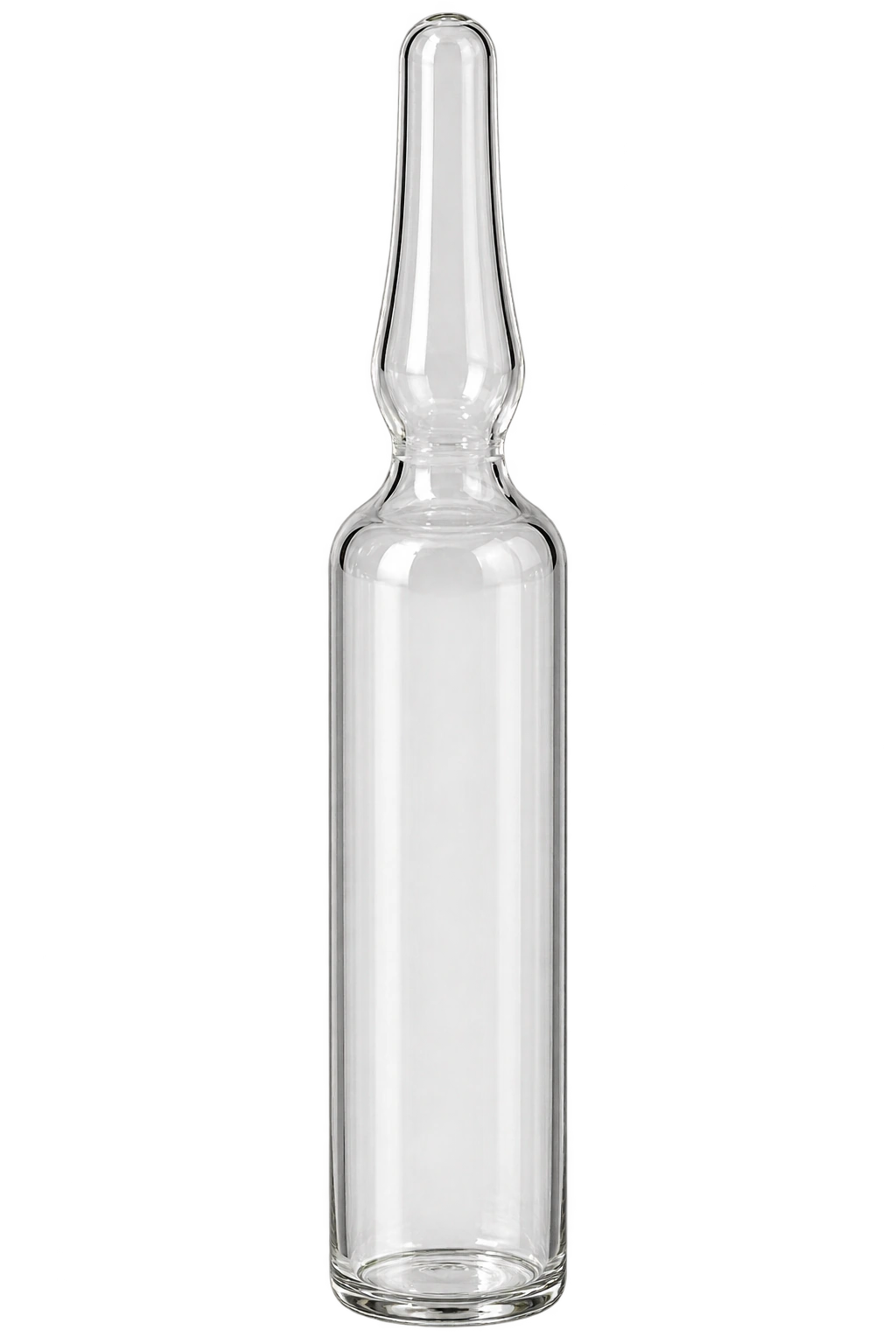
A preformed glass pack with a break-open neck.
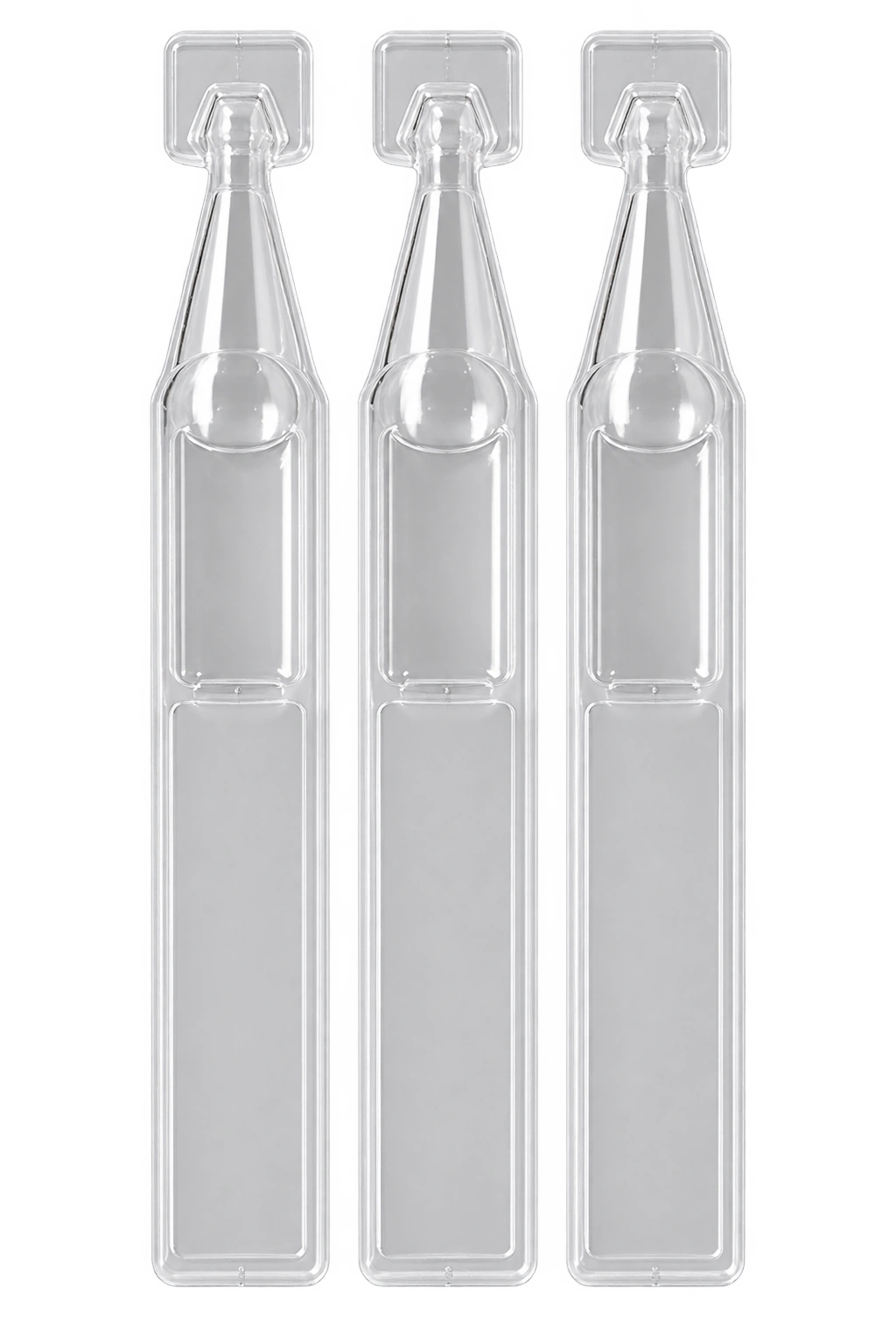
A polymer pack formed, filled and sealed in one machine cycle.
BFS format advantages
These points help compare a BFS polymer unit with a conventional ampoule: how the pack is made, how it opens, and how dose and pack-out are chosen.
Polymer is extruded, shaped into the container, filled, then closed before the unit leaves the machine.
No separate empty pack is washed, stored or transferred before filling; the container is made in line.
The polymer unit is lighter than glass and does not shatter like a glass ampoule in handling, transport or opening.
The opening is molded with the container, typically a twist-off head rather than a scored glass neck.
Fill volume and container geometry are set together, then reviewed against the formula and the intended use amount.
The mold can release separate units or a connected strip, depending on handling and secondary-pack needs.
Fit still depends on the formula and how the unit will be used, including barrier need, dose and opening method.
BFS development and manufacturing
We turn early inputs into a defined container format, physical samples and an agreed manufacturing version, so the product and pack are reviewed before volume is planned.
Bring a formula, product sample or early specification. We identify the intended dose, material questions and target market.
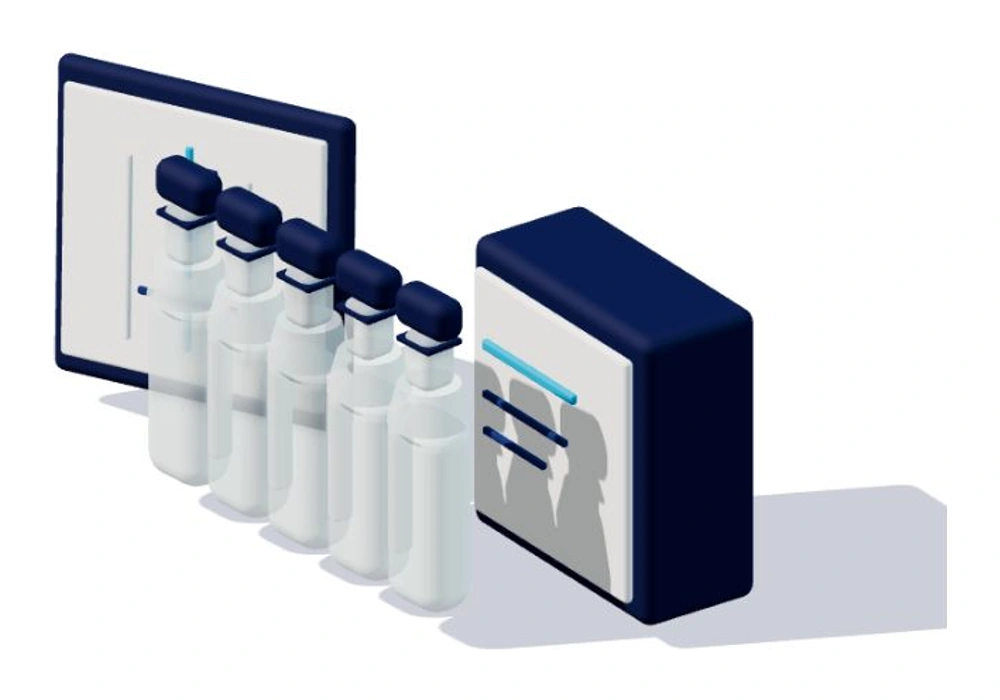
A formula sample bottle beside an upright project briefSet the unit presentation, opening method and secondary-pack direction around the intended use.
A packaging drawing, connected single-dose units and a carton mock-upCreate physical units to review the format and project requirements before volume manufacture is planned.
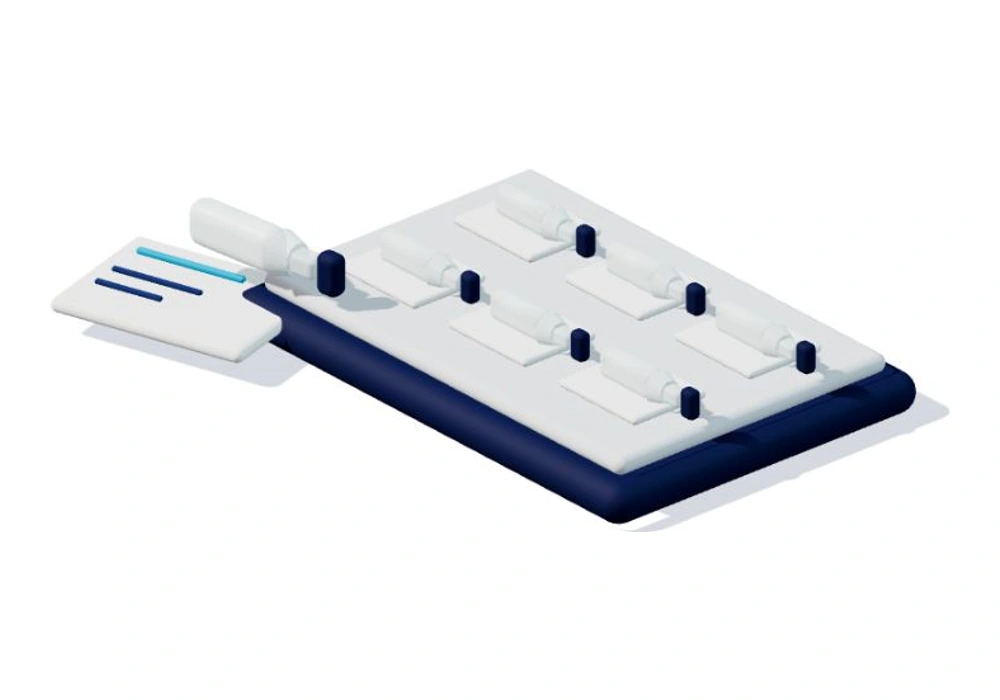
A development tray holding the first physical single-dose samplesProceed against the confirmed sample, project controls and agreed document set.
A generic isometric manufacturing facilityThe facility illustration is generic. Project format, controls, documentation and manufacturing arrangements are confirmed case by case.
Route Insights
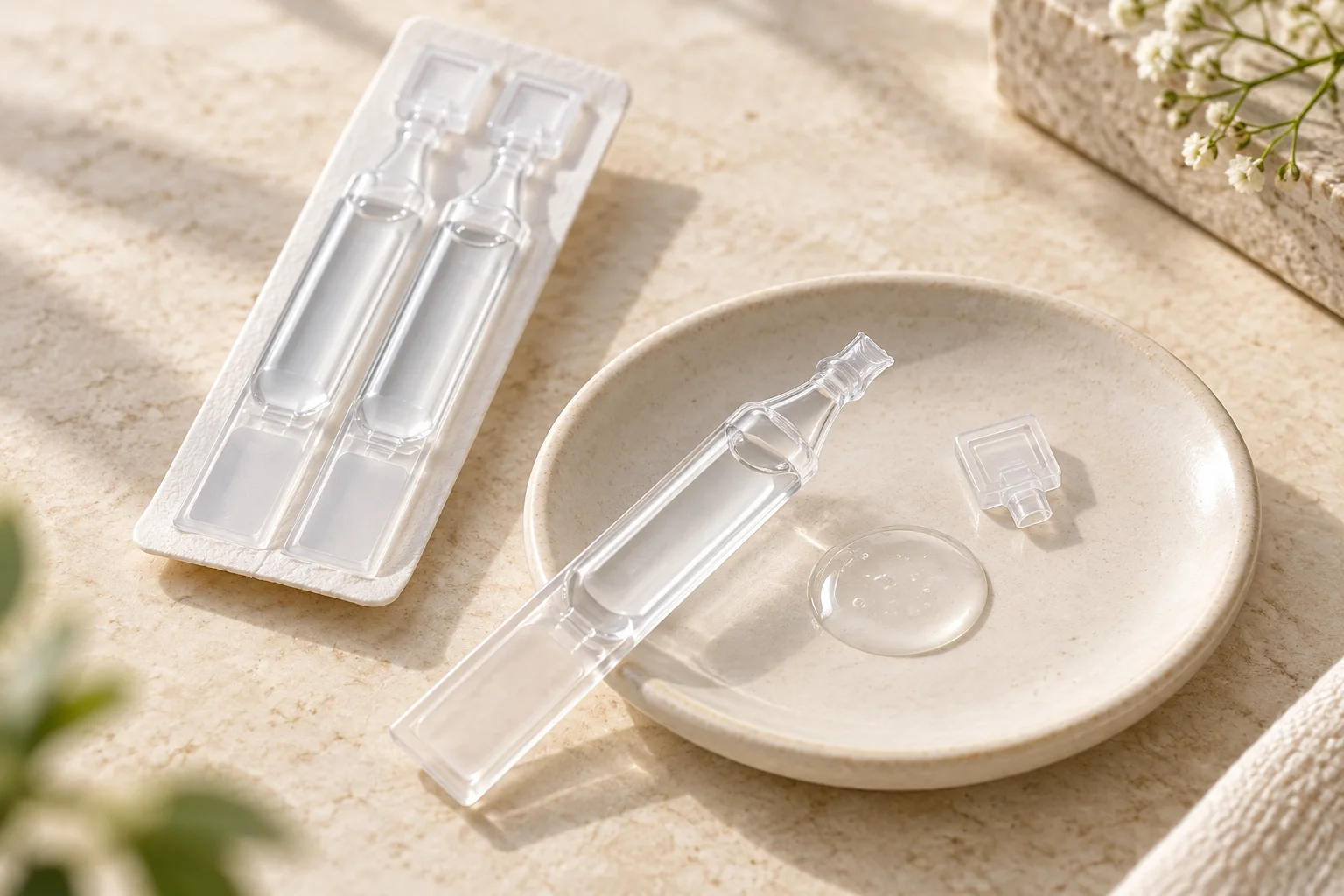
The flagship answer: what the format is, how exposure is controlled, and how to read the preservative question.
Open this note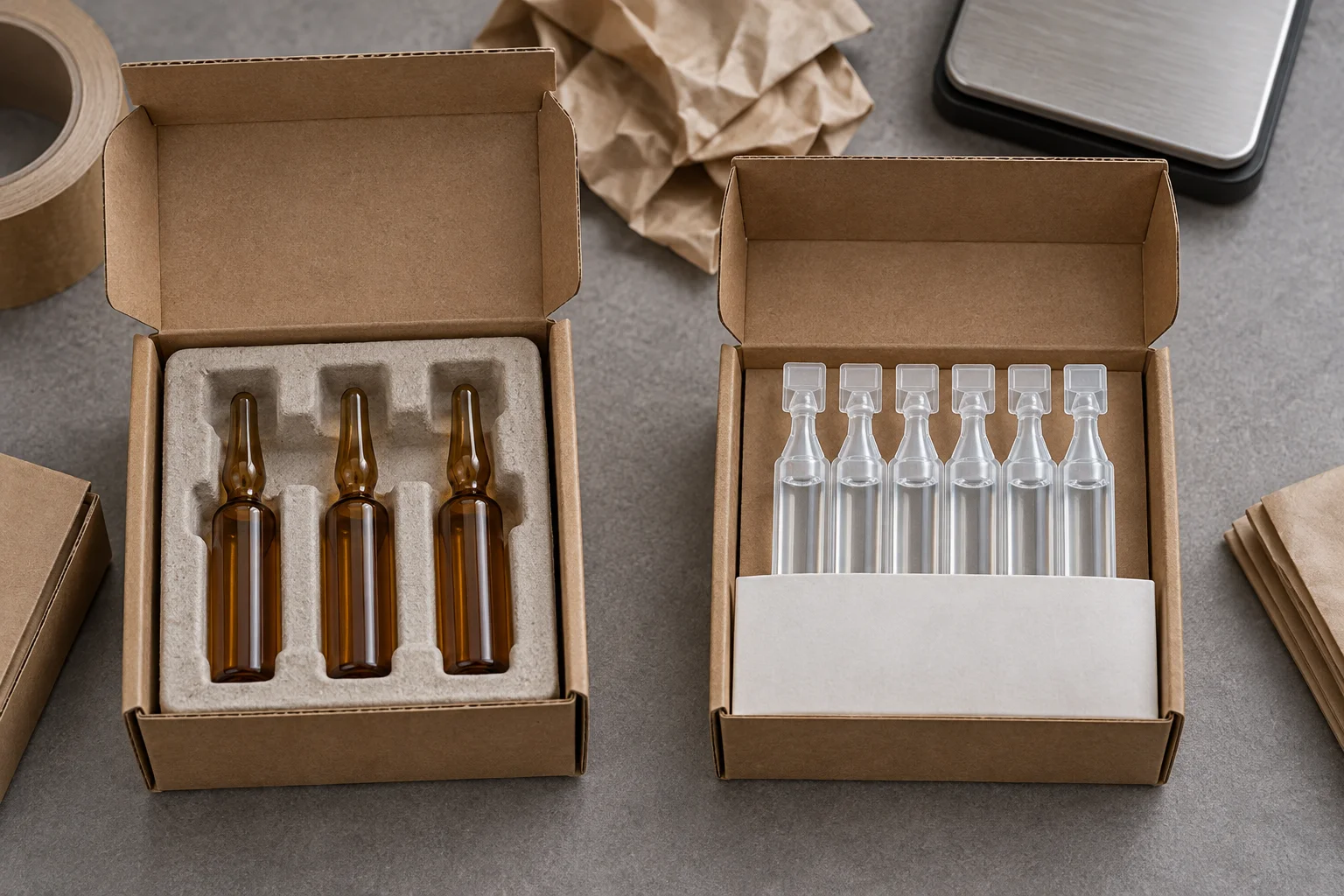
The reasons brands compare a polymer single-dose unit with glass: handling, shipping, opening and the routine — not a ranking.
Open this note
Line fit, formula compatibility, pilot transfer and documentation — the questions to ask before naming a BFS partner.
Open this note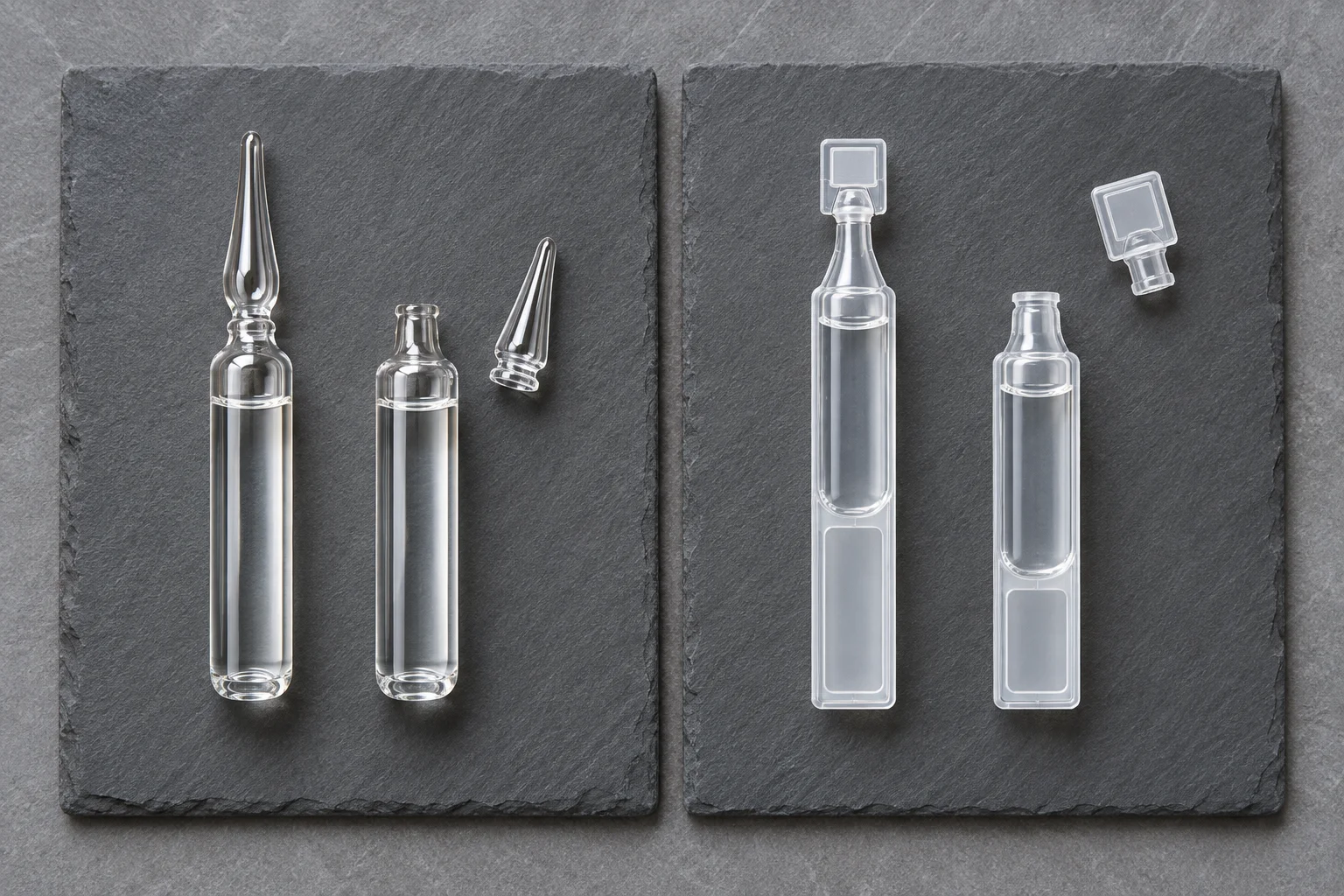
Side-by-side dimensions: container timing, seal, opening, handling and positioning. A comparison, not a winner.
Open this note
A versioned review of one formula against one named pack, under the storage and use conditions you intend to support.
Open this note
A route choice about container timing: formed during filling, or supplied as a specified vial and closure. Fit checks, not a ranking.
Open this noteDiscuss your BFS single-dose project
Before you send it