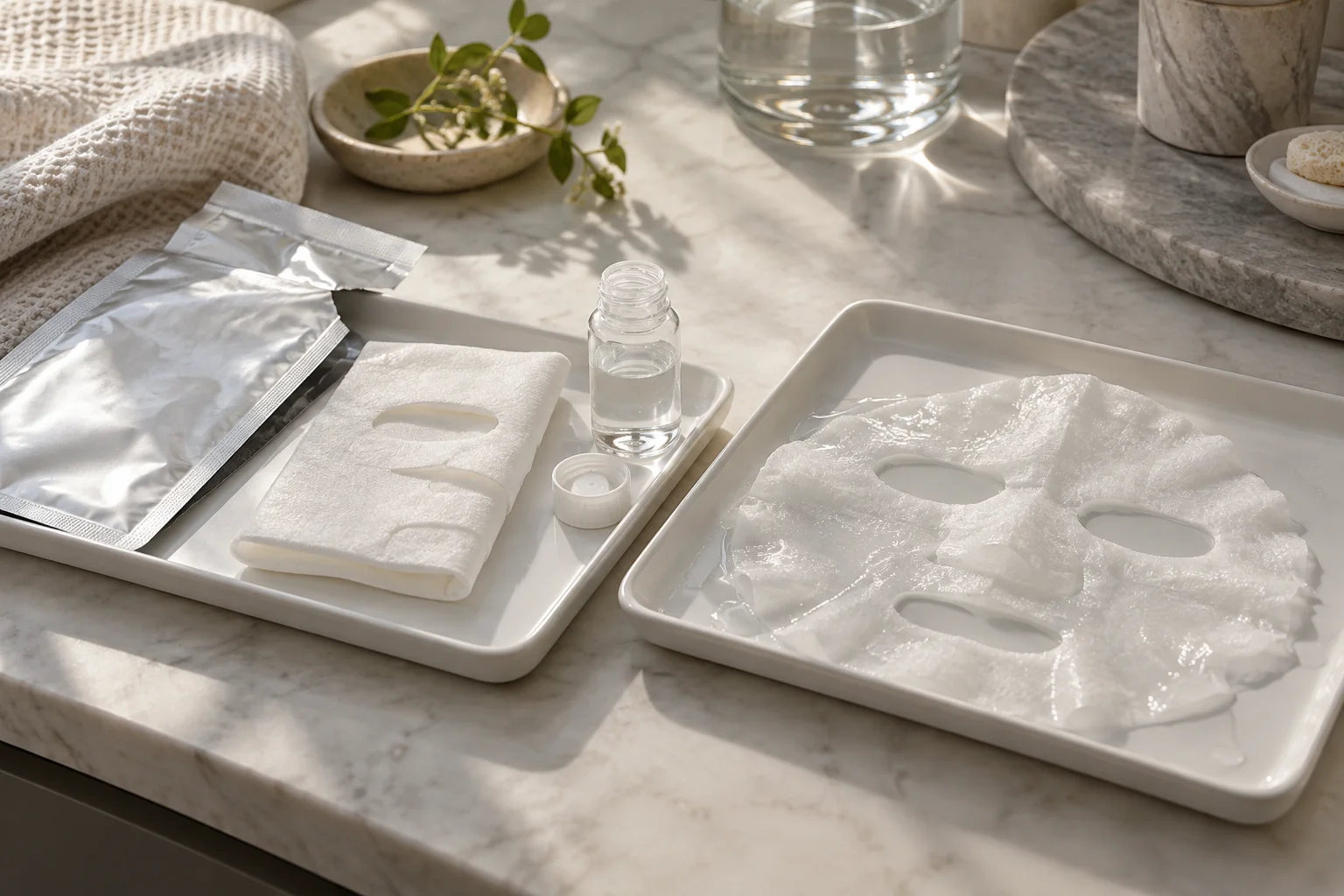
Plan the activation experience first
Activation is part of the product
Activation sequence. Reconstitution volume and order are defined per project.
- Dry presentationThe unit reaches the user dry. Size, shape and how it sits in the pack are the first thing seen.
- ActivatorWhat it is activated with, and in what quantity, is carried through to the pack instructions.
- Outer packSachet, tray or cup and carton are reviewed with the unit, not chosen afterwards.
A freeze-dried mask concept has two parts to consider: the dry product and the steps the customer follows to prepare it. Begin by describing that experience. Will the customer add a supplied liquid, use a separate activator or follow another defined preparation method? The answer shapes the package and instructions.
A reference sample is helpful, especially when it shows the full set rather than only the dry component. Include the sheet or treatment format, companion container, tray or sachet and outer carton where relevant. This makes the intended sequence easier to assess.
Treat the dry format as a development question
Bring the formulation team into the discussion before committing to a packaging shape. Share the intended product, formula status and what the dry format is meant to achieve. The team needs to assess whether the proposed formulation and manufacturing route are suitable together.
A freeze-dried appearance does not establish how a formula will perform or what claims the finished product can carry. Keep the desired customer benefit separate from the evidence needed to support it. The project review should identify the development and verification work that remains.
Consider the companion liquid as part of the set
If an activator is supplied, define its role in the brief along with the container, opening method and intended amount. The customer needs to recognise which component to open first and where the liquid should go. Evaluate the complete sequence using physical samples.
Look at the practical details: whether the tray is easy to hold, whether the liquid transfers cleanly and whether the prepared mask can be removed without an awkward extra step. Record problems encountered during the sample review rather than relying only on the visual design.
Choose packaging around handling and storage needs
Compare the dry-product enclosure, companion container and retail pack as one system. Ask what protection and handling requirements follow from the chosen formulation and route, then review materials and closures against those requirements.
The packaging discussion should include shipping, storage and how the product is presented after the carton is opened. A multi-treatment set may need individual identification and instructions that remain available after the first use. Avoid assuming that a familiar sachet or vial is suitable without review.
Write instructions while the pack is being developed
Draft the opening and activation sequence early enough to test it with the samples. Use short, concrete steps and identify each component consistently. Review whether the user can understand the sequence from the package and whether any quantities or timing instructions are supported by the agreed product method.
Artwork and product development should move together. Changes to the activator container, dry component or tray can change the user instructions. Keep the latest sample and instruction version linked so the final review covers the complete experience.
Bring a complete brief to the first review
Share the intended mask format, formulation status, activator concept, target market, retail quantity and launch timing. Include references showing what you like about the customer experience, not only the graphic design. Note which parts are fixed and which can be developed with the manufacturer.
Review the lyophilization route, compare examples on the skincare page, or discuss a mask project with the team.