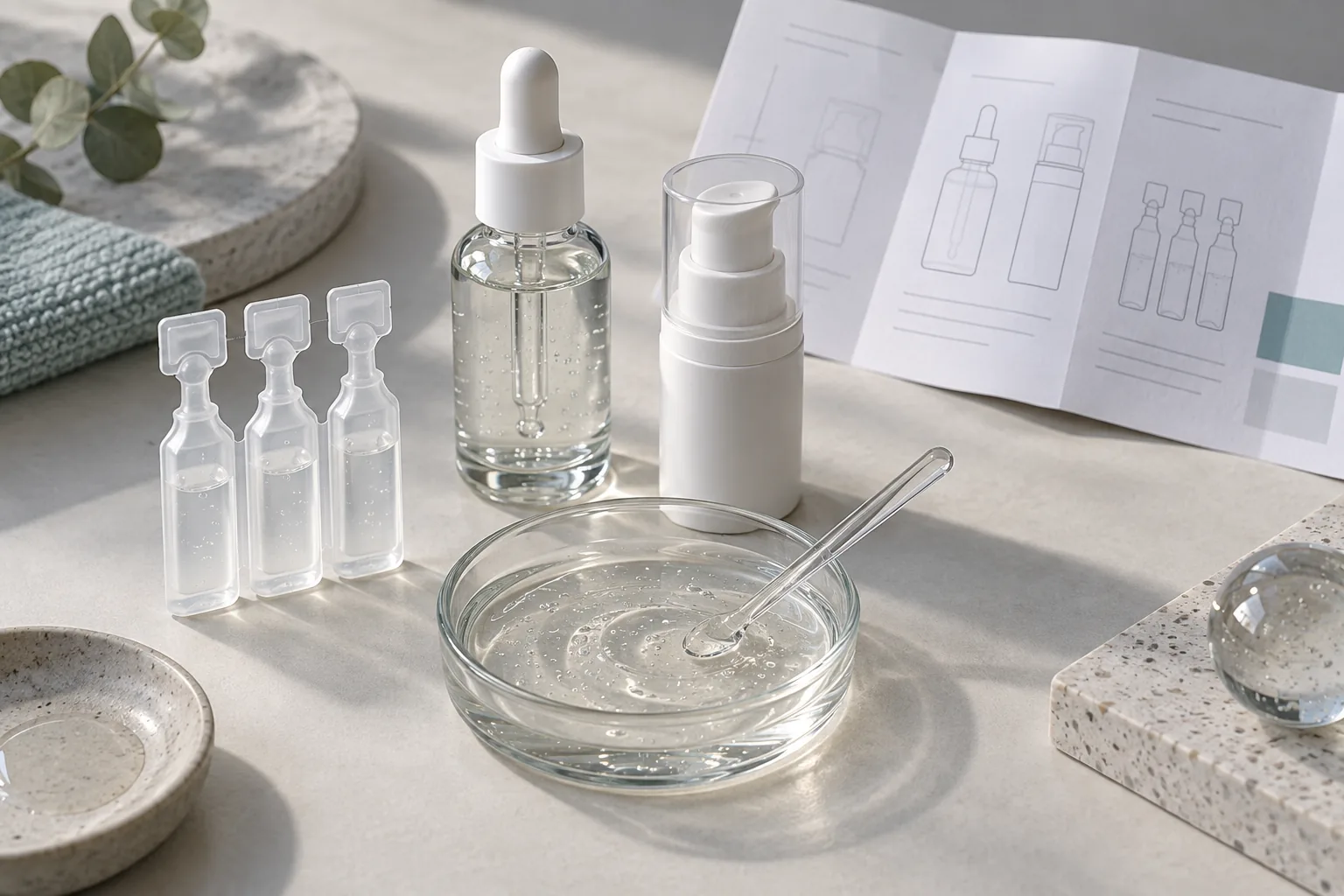
“We have a product idea” and “we have finished bulk ready to fill” lead to very different jobs. Tell the supplier which one describes you. Then agree who handles the formula, packaging and finished goods before asking for a production price.
Private label or OEM: start with the formula you have
What are you bringing to the manufacturer?
Project starting points, not fixed definitions of OEM or ODM. Confirm the scope with each supplier.
Existing formula
- A supplier sample you already like
- Decide on packaging and available rights
Modified base
- A sample that needs a specific change
- Price the revision and testing it needs
New development
- Requirements no existing sample meets
- Agree how samples will be accepted
Formula transfer
- Your formula and permission to use it
- Provide the production instructions and records
Private label usually means putting your brand on a supplier-developed product. OEM stands for original equipment manufacturer; ODM stands for original design manufacturer. These labels leave room for different arrangements in skincare, so ask each supplier to explain the work included. One of these four starting points will make the conversation more specific.
1. You like an existing sample
If the sample already meets your brief, you can focus on the pack, branding and order. Ask whether other brands can buy the same formula and which supporting documents come with it. You have less formulation work to commission, but packaging availability, testing and approvals still affect the launch date.
2. The sample is close, but one thing needs changing
Perhaps the texture works, but you want a different fragrance or need to exclude an ingredient. Write down the change and what you want to keep. The development team should explain which existing test results still apply, what needs checking again and what the revision costs. A small change in the brief can still require new work.
3. None of the samples does what you need
Describe the gap in terms someone can evaluate: how the product spreads, how it comes out of the pack or how it feels after application. A reference product helps communicate that target; it does not give the developer its formula.
Before paying for development, agree how many sample revisions are included and how you will decide whether a sample meets the brief. Also settle what happens if none does. That decision is easier to make before both sides have spent time on the project.
4. You already have a formula to transfer
The receiving manufacturer needs enough information to reproduce the product, and you need the right to share and use it. Prepare the composition, raw-material specifications, processing instructions, finished-product specifications and relevant test records. Let the receiving team identify gaps before it commits to a production date. If you only need existing bulk filled, say that explicitly.
Are you buying filled units or finished retail boxes?
Where does the supplier’s quote end?
Bulk, filled units and retail boxes are different handover points. Name the one your quote must cover, including who supplies the packaging.
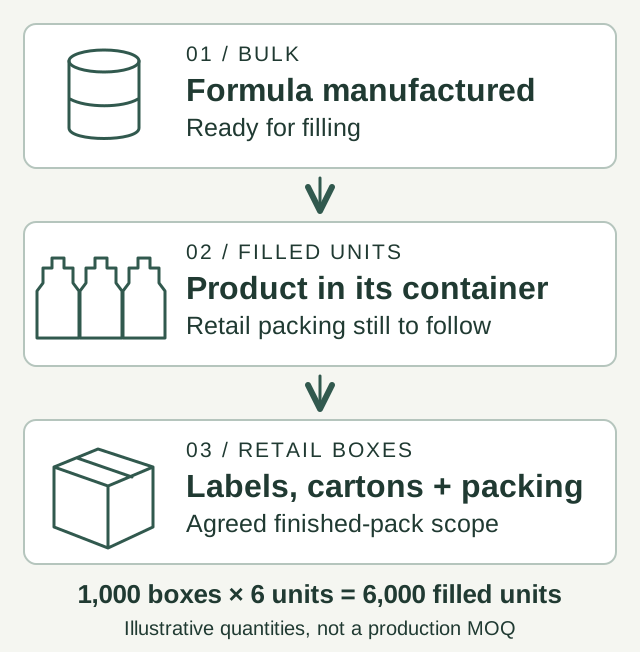
Suppose you want 1,000 boxes with six single-dose units in each. You need 6,000 filled units in those boxes. One supplier quotes for the loose units; another includes labels, cartons and packing. Those prices cover different jobs. Ask both to quote the same 1,000 finished boxes, with testing and retention quantities listed separately. This is an example of quote arithmetic, not a production MOQ.
Describe the finished item in enough detail to price it: formula version, fill amount, container, closure, label, units per box and any inserts. Then assign packaging procurement. For example, RainShadow Labs asks customers to select packaging and send it for assessment before a filling quote. Other suppliers may arrange procurement themselves. Find out who orders, checks and stores your components.
Keep development, sample revisions, testing and tooling separate from repeat-order costs. Specify the delivery location and ask whether freight and duties are included. The quote should also name its assumptions: quantity per SKU, materials you will supply and deadlines for your approvals. Ask which charges remain payable if you stop development.
Once the scope matches, compare quantities using the MOQ, pilot run and scale-up guide. A low unit price has little meaning until you know how many complete products you must order to get it.
What do you keep after paying for development?
Put formula rights into the agreement before development starts. A fee alone tells you neither who owns the work nor what you can take to another factory. Separate three questions:
- Use: Which formula version may your brand sell, and can you keep using it after the relationship ends? Identify ownership of the existing work and the new development.
- Exclusivity: Does it cover the base formula or only your modification? Define the territory, channel, duration and conditions, such as any agreed purchase commitments.
- Transfer: Which formula, process instructions, specifications and records would another manufacturer receive? Agree when they become available and any fees or restrictions.
A supplier may protect its formula as confidential information. WIPO includes formulas and manufacturing information among possible trade secrets. Arrange confidentiality before exchanging proprietary details, but address use and transfer rights separately in the contract. Signing an NDA does not answer those commercial questions.
When you approve a sample, say what you approved
A jar of lab sample lets you judge texture and feel. It cannot show how that formula will dispense from your chosen ampoule. Write the sample identifier, formula version and packaging version on the approval, together with the decision: texture accepted, dispensing accepted or artwork accepted, for example.
Keep a list of what remains open. Before production, both sides need the final specifications, artwork and release criteria, with someone responsible for each approval. For a packaging test report, check that it covers your formula and container, the conditions tested and any limits on the findings. If it covers a different pack, the team needs to explain whether the results apply.
Document access matters too. For the US, FDA’s cosmetics fact sheet, section 8, explains that the manufacturer, packer or distributor named on the label generally must ensure adequate safety substantiation and keep supporting records. Agree who reviews the product and claims for your target market, what records you receive and how an assessor can access confidential formula information. The US example is not a checklist for other markets.
Moving a serum into BFS or glass changes the brief
You may like a stock serum in a pump bottle and want to sell it in single-dose ampoules. Bring that change into the first discussion. The team needs to assess the formula with the proposed filling process, contact material, opening and delivered amount. Approval of the pump-bottle sample does not cover the new pack.
Use the formula and packaging compatibility guide to specify that work, or the facial serum OEM guide for serum development. Keep the existing bottle in the comparison if it already serves your customer well. Decide what the ampoule needs to improve before investing in the change.
What to share in your first skincare enquiry
You can start a conversation before you have a finished formula or complete packaging specifications. Share what you know about these four points:
- The product you want to make. Describe who will use it and where you plan to sell it. Mention any ingredient restrictions or performance requirements that will affect development.
- What you have ready. An idea, reference sample, existing formula or finished bulk each gives the supplier a different starting point. Explain which parts you need help with.
- Your packaging ideas. Share the container type and fill amount if you have chosen them. If you are still comparing options, describe how the customer will use the product.
- Your first order and timing. Give an estimated quantity for each product and your intended launch date. Say whether you mean individual units or retail boxes. A rough plan is enough for the first discussion.
If something is undecided, say where you need advice. The supplier can then explain what needs checking before samples, a firm quote or a production date can be agreed. To discuss skincare development and manufacturing with SteriDose, send the information you have so far.
What to agree before development starts
Before paying for development, confirm formula use and ownership, any exclusivity, and whether you could move production to another manufacturer. Agree which test reports and product records you will receive. Ask for development and other one-time charges to be separated from repeat-order costs, with exclusions and cancellation charges stated. These details belong in the agreed scope of work; you do not need to settle them to make a first enquiry.