Start with the experience you want to create
A skincare product brief is easier to evaluate when it begins with the person using it. Describe where the product belongs in a routine, how often it is used and what the customer should do when opening the pack. A daily moisturiser, an occasional treatment and a travel product can contain similar ingredients while needing very different packaging.
Bring an existing product, a texture benchmark or a short description of the intended experience. Explain what you want to keep and what should change. This helps a manufacturing discussion move beyond appearance to the choices that affect filling, dispensing and the finished presentation.
Choose the formula and format together
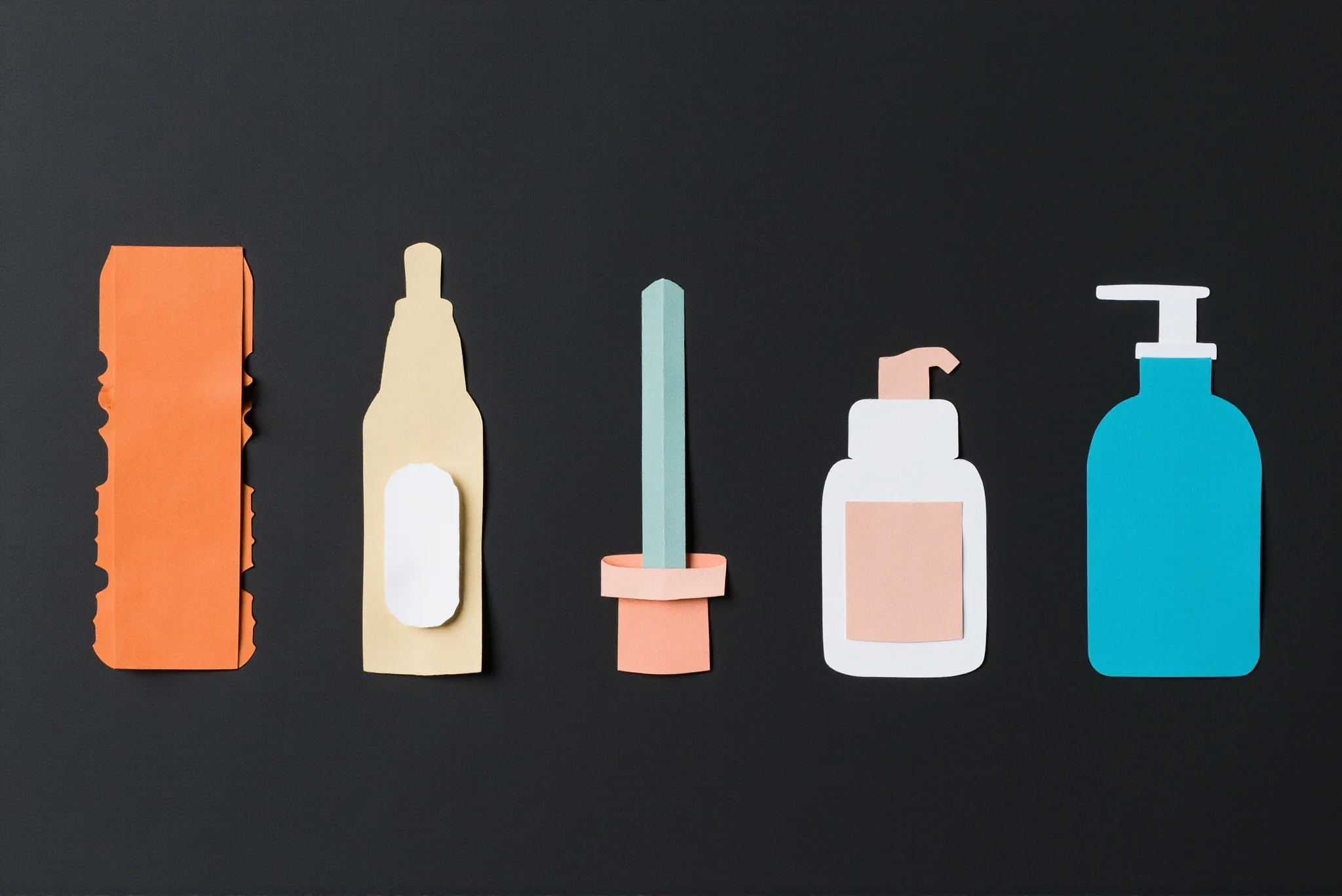
Five routes held side by side
Starting points from the working library. Availability, price and clearance stay project questions.
BFS
- Form, fill and seal in one sequence
- Polymer unit, opening in the mold
Lyophilized
- Dry presentation plus activator
- Cycle and pack decided together
Glass
- Preformed glass, flame seal
- Break-open neck
Preformed
- Container exists before the fill
- Closure is a separate choice
Conventional
- Pump, tube, jar, dropper
- Recappable multi-use reservoir
The package is part of the product development work. A pump, tube, jar and single-dose unit each create a different way to handle and dispense a formula. Ask the development team which routes are worth sampling for the proposed texture and use occasion.
If a formula already exists, identify whether it is ready for transfer or still being developed. Share the available specification and the intended claims through the agreed review channel. A similar-looking pack is a useful reference, but compatibility needs to be assessed with the actual formula and contact materials.
Define what one use means
For a single-dose concept, describe the application area and the expected amount per use. Let the sampling process test whether the proposed pack delivers that amount comfortably. Consider how the user grips it, opens it and controls the flow, including any product that remains inside.
For a multi-use format, focus on access, dispensing consistency and closure. A useful brief records the desired behaviour rather than choosing dimensions only from a photograph. Physical samples can make these decisions much clearer than a drawing.
Make the pack understandable at a glance
Give the product a clear name and establish which information belongs on the primary pack and which belongs on the carton or supporting instructions. The customer should be able to distinguish the product from other items in the range and understand the opening sequence.
Review decoration, label space, surface finish and the retail arrangement together. A clean design still needs room for the required product information. If units are sold as a set, decide how they are organised and identified when separated from the outer packaging.
Review samples before planning the launch
Agree on what each sample round is meant to resolve. One round may focus on texture, another on the container and another on the finished retail presentation. Keep a short decision log so changes to the formula, package or instructions remain connected.
Before production planning, bring together the agreed specification, sample decisions, target markets and quantity expectations. The manufacturing team can then review the proposed route, remaining checks and schedule against a concrete product brief.
What to send with the enquiry
Share the product type, formula status, target customer, packaging references, target market and intended launch timing. Include quantity expectations if known, and separate firm requirements from preferences. An early brief is useful even when some decisions are still open.
Explore skincare formats to compare possible presentations, or send your product brief to discuss the next sample and review steps.